 Travel News Update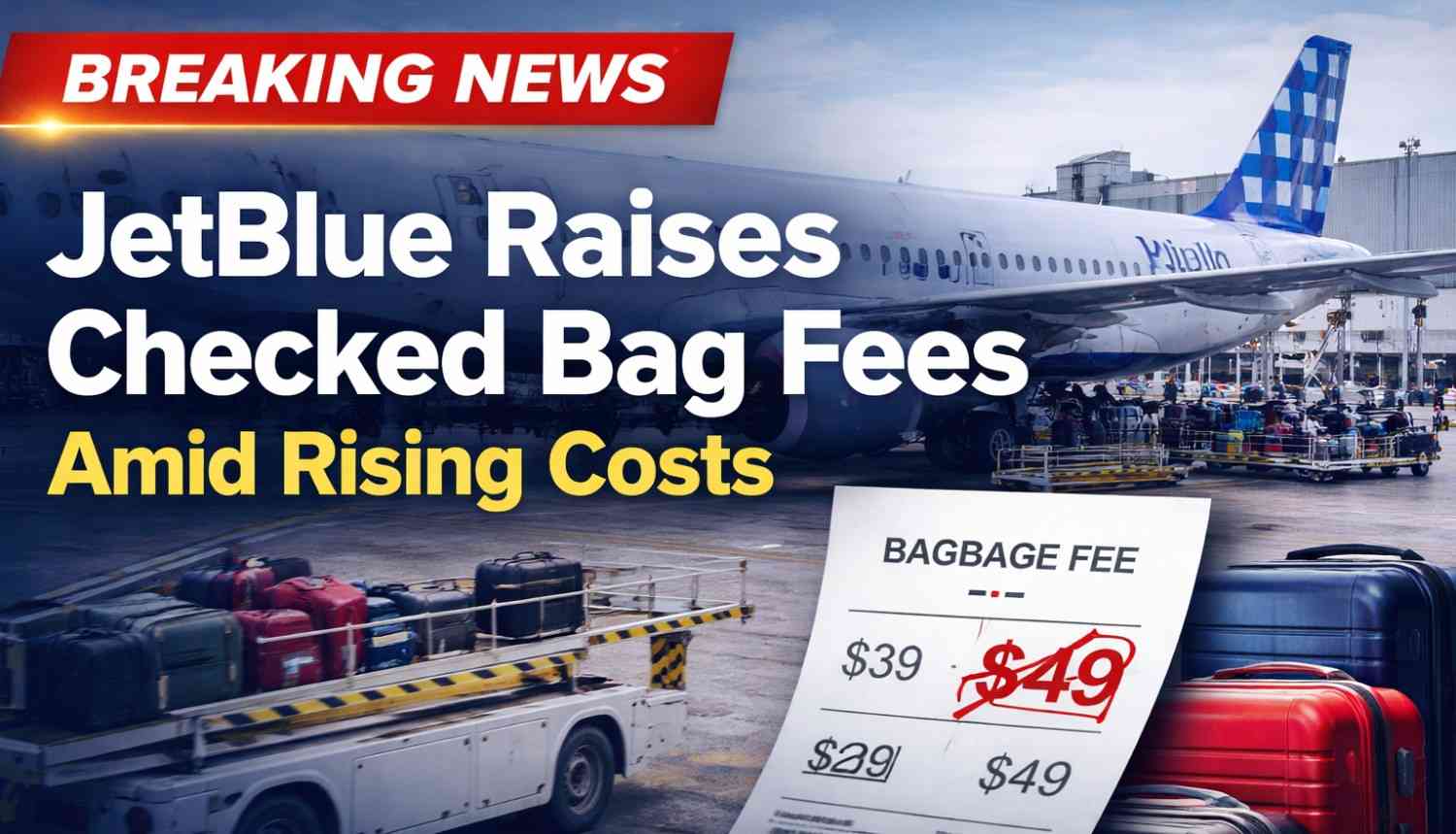
Airline Adjusts Optional Service Pricing Strategy
JetBlue has announced an increase in checked baggage fees as part of its strategy to manage rising operational expenses while maintaining competitive base fares. The airline industry shows this development through its current situation which requires airlines to handle increasing operational costs that arise from rising fuel expenses.
The airline announced that its service modifications will affect only optional services which enable the company to provide low-cost tickets together with its in-flight services.
New Checked Bag Fee Structure
Under the updated pricing, passengers traveling within the United States, Canada, Latin America, and the Caribbean will now pay higher fees for checked luggage. For off-peak travel periods, the cost of checking one bag has increased to $39, up from $35. During peak travel times, the fee rises to $49, compared to the previous $40.
Additionally, travelers who book their flights within 24 hours of departure will face even higher costs. In such cases, the fee increases by an additional $10, bringing totals to $49 for off-peak and $59 for peak travel periods.
These changes are already reflected on the airline’s official booking platforms.
Loyalty Members Still Receive Benefits
Despite the fee hikes, JetBlue has maintained benefits for its loyal customers. Members of the airline’s frequent flyer program and JetBlue credit cardholders will continue to receive their first checked bag free of charge.
This approach allows the airline to reward repeat customers while generating additional revenue from occasional travelers who utilize these optional services.
Rising Fuel Costs Driving Changes
The primary factor behind the fee increase is the surge in global jet fuel prices. Since the escalation of geopolitical tensions involving Iran, fuel costs have risen significantly, impacting airlines worldwide.
Fuel is one of the largest expenses for any airline, and fluctuations in its price can have a substantial effect on profitability. By adjusting ancillary fees such as baggage charges, airlines like JetBlue aim to offset these rising costs without significantly increasing ticket prices.
Balancing Costs and Customer Experience
JetBlue stated that it carefully evaluates pricing changes to ensure they are implemented only when necessary. The airline also highlighted its commitment to delivering a high-quality passenger experience.
Passengers will continue to enjoy complimentary snacks and beverages, high-speed Wi-Fi, and seatback entertainment screens—features that differentiate JetBlue from many of its competitors.
By shifting some of the cost burden to optional services, the airline seeks to preserve these customer-focused offerings while remaining competitive in a challenging market environment.
Industry-Wide Trend Likely to Continue
The increase in baggage fees is part of a broader trend within the aviation industry. As demand for travel remains strong, airlines are balancing higher operating costs with the need to keep fares attractive.
Industry experts suggest that ticket prices and additional fees may continue to rise through the summer as airlines navigate ongoing economic and geopolitical uncertainties.
Conclusion
JetBlue’s decision to raise checked bag fees highlights the delicate balance airlines must maintain between profitability and customer satisfaction. While the changes may impact travelers who rely on checked luggage, they also help the airline sustain competitive fares and maintain service quality.
As cost pressures persist, similar adjustments across the industry are likely, making it increasingly important for travelers to stay informed about airline fee structures.