
 Travel News Update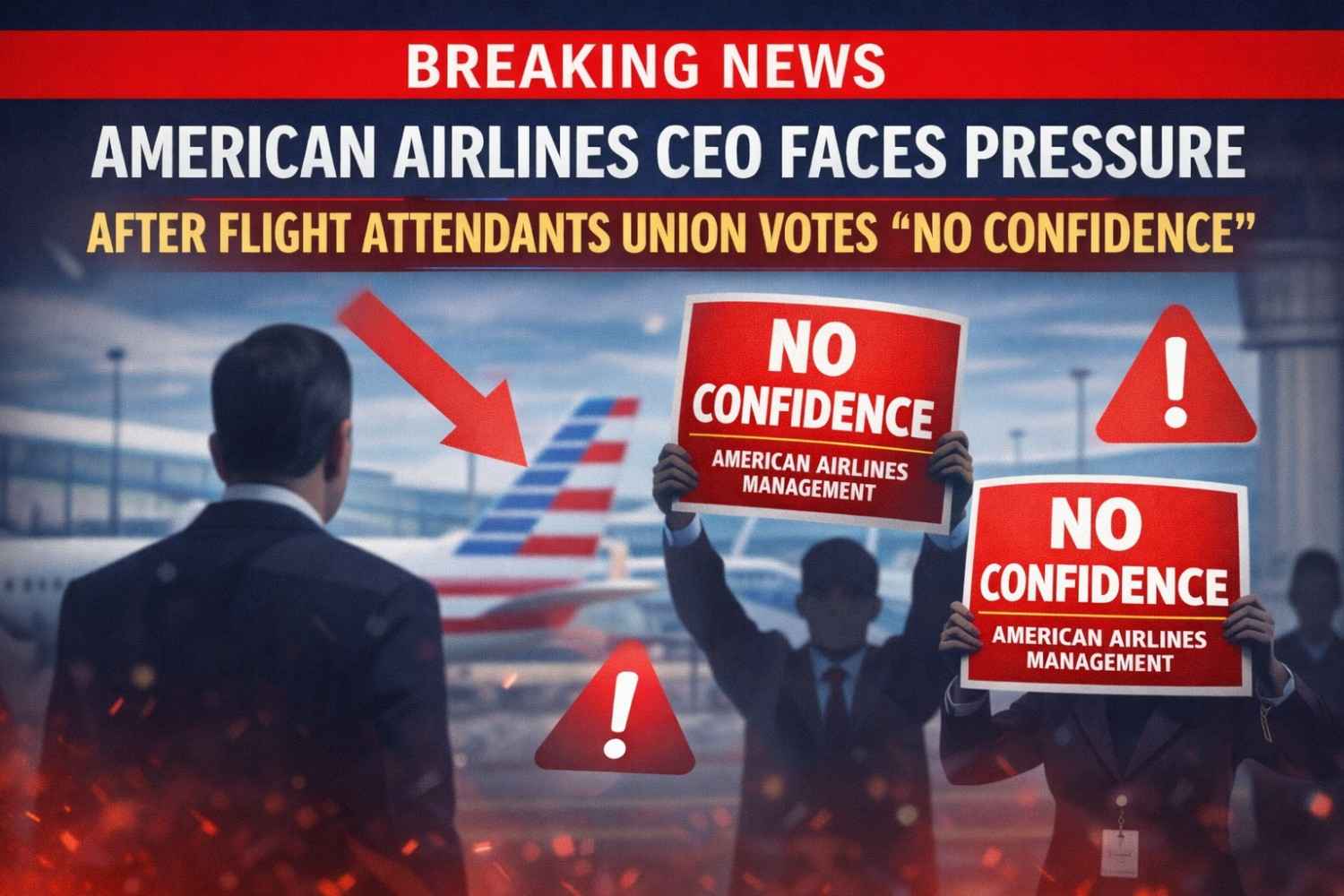
American Airlines is undergoing fresh leadership turbulence after its union of flight attendants voted to become the first in the industry to issue a formal no-confidence vote against CEO Robert Isom, ratcheting up tensions between White-collar management and frontline workers at one of the country’s largest airlines.
The Association of Professional Flight Attendants (APFA), which represents about 28,000 American Airlines’ flight attendants, cast the unanimous vote this week citing concerns with the airline’s financial outlook, operational performance and long-term strategy.
The move increases the pressure on American Airlines’ management as the airline grapples with brutal competition from Delta Air Lines and United Airlines.
Why the Union Voted No Confidence
Union leaders say the decision marks increasing angst among flight attendants over:
- Operational disruptions and reliability issues
- Profitability Concerns vs industry competitors
- Strategic decisions affecting frontline employees
- Communication issues believed to exist between staff and management
The union’s board said it believed the airline is lagging behind its major competitors in both performance and relations with employees.
A “no confidence” vote doesn’t in itself oust a chief executive, but it serves as an explicit signal to the airline’s board of directors and shareholders. Labor peace is important for airline stability, particularly at an airline the size of American Airlines, which flies thousands of daily flights on routes that are both domestic and international.
American Airlines’ Competitive Position
American Airlines has had a tough competitive environment the last couple of years. Delta and United have reported stronger financial margins and operational changes, while American has sought to rebalance its network strategy and focus on corporate travel.
Airline made changes to distribution strategy recently in response to criticism from corporate travel agencies and business customers. Those changes prompted more internal and external criticism.
Meanwhile, American has been pouring money into product improvements such as:
- Expansion of premium cabin offerings
- Development of new Flagship Suite products
- Admirals Club lounge renovations
- Fleet modernization efforts
Despite these efforts, labor activists complain that performance gaps remain.
What This Means for American Airlines
The effect on passengers for now is minimal. Flights are being operated as normal, and the vote is not a strike authorization nor does it reflect a work stoppage. However, the broader implications could be significant:
Board-Level Pressure – The board of the airline company may increasingly be called to assess its leadership’s strategy and vision in the long run.
Investor Confidence – Noisy feuds between labor unions and management can sway investor sentiment, particularly in a fiercely competitive aviation industry.
Labor Relations Stability – Airlines are very dependent on employee morale and coordination of operations. Conflict between administration and front line employees can be detrimental to service quality and jeopardizes the long-term sustainability.
American Airlines hasn’t signaled any change in leadership after the vote, and votes like that one historically don’t trigger immediate executive ousters.
Broader Trend in U.S. Aviation
The dynamic at American Airlines is indicative of a broader shift taking hold in the American airline industry, where rank-and-file labor groups are growing more vocal about corporate strategy and financial performance.
Airline employees across the country bargain better contracts, pay raises and workplace protections now that we’re in a recovery from the pandemic. As profitability varies unevenly among airlines, unions are closely watching the decisions being made by executives.
Delta and United, as premium-focused global carriers, have both made their bed, while American is still fighting to find its competitive identity. Planners are noting that without clear strategic vision for the long term, employee confidence to work at a company or market share both will dwindle.
Industry Reaction
Aviation analysts say that, while the vote has symbolic importance, its practical effect will come down to how leadership responds in the next few months. If management can better communicate with employees and show them better operational metrics, things might settle down. But ongoing financial underperformance versus rivals could increase the chorus for change.
What Happens Next?
Key developments to watch include:
- Any formal reply from the board of American Airlines
- Possible strategic changes in network or revenue management
- It may come back to haunt us in future labor negotiations or public protests
- Quarterly profits vs Delta and United
The next few months will be crucial to prove whether this is purely a symbolic vote or a sign of greater structural change within the airline.