
 Travel News Update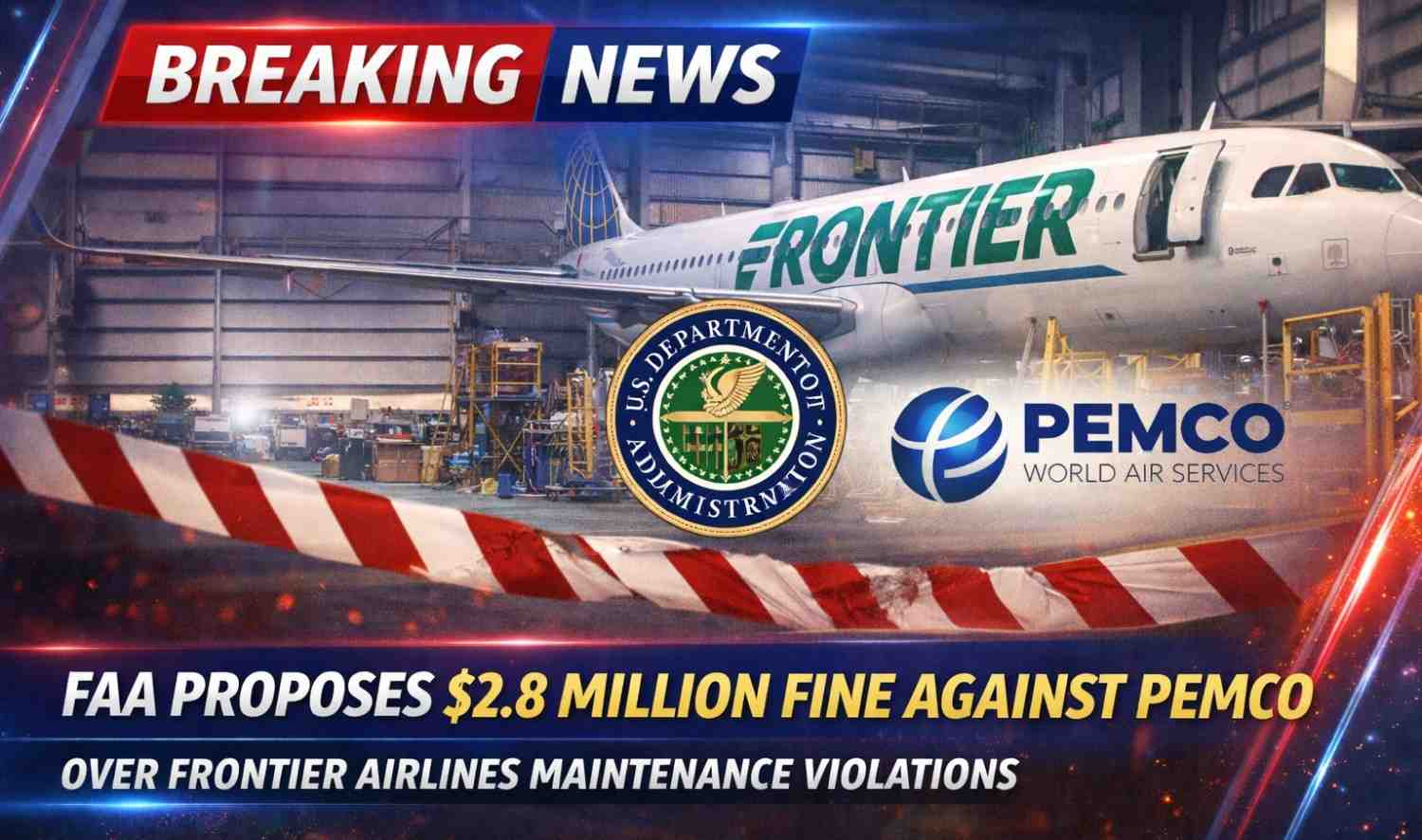
FAA Takes Enforcement Action Against Maintenance Provider
The Federal Aviation Administration (FAA) has proposed a civil penalty of $2.8 million against PEMCO World Air Services for allegedly violating maintenance regulations while working on aircraft operated by Frontier Airlines. The enforcement action centers on claims that the company used expired materials during aircraft maintenance procedures, raising regulatory concerns about compliance with federal aviation safety standards.
According to the FAA, PEMCO installed or used materials such as adhesives and sealants that had exceeded their approved shelf life. These materials are critical in aircraft structural repairs and must meet strict regulatory and manufacturer specifications to ensure safety and durability.
Importance of Shelf-Life Compliance in Aircraft Maintenance
Aircraft maintenance involves the use of specialized materials designed to withstand extreme pressure, temperature, and environmental conditions. These materials have defined shelf-life limits because their effectiveness and reliability can deteriorate over time. The FAA stated that using expired materials could compromise repair integrity and potentially impact aircraft safety if not properly controlled.
The agency emphasized that strict compliance with material expiration requirements is essential to maintaining airworthiness. Certified repair stations like PEMCO are required to track, monitor, and dispose of expired materials to prevent their use during maintenance procedures.
Scope of the FAA Investigation
The FAA’s investigation reportedly identified multiple instances in which expired materials were used during heavy maintenance checks. These maintenance events involved structural work performed on Frontier Airlines aircraft. The agency alleges that PEMCO failed to maintain proper inventory control systems to ensure expired materials were removed from service.
While there have been no reports of accidents or immediate safety threats linked to the violations, the FAA stressed that regulatory compliance is mandatory regardless of whether an incident occurs. Aviation regulations are designed to prevent risks before they can affect aircraft safety.
Response and Next Steps in Enforcement Process
Under FAA enforcement procedures, PEMCO has the opportunity to respond to the allegations. The company may contest the fine, submit supporting documentation, or work toward a negotiated settlement. In many cases, enforcement actions also require corrective measures to improve compliance and prevent future violations.
PEMCO World Air Services is a well-established maintenance, repair, and overhaul provider serving commercial airlines. As an FAA-certified repair station, the company must meet strict federal standards governing maintenance procedures, documentation, and quality assurance.
Broader Impact on Aviation Maintenance Oversight
The FAA’s proposed penalty reflects the agency’s continued focus on strengthening oversight of maintenance providers and ensuring regulatory compliance across the aviation industry. Maintenance providers play a critical role in ensuring aircraft safety, and regulators closely monitor their operations.
The enforcement action also serves as a reminder to maintenance organizations about the importance of strict quality control procedures. As airlines continue expanding operations and aircraft utilization increases, regulatory oversight remains essential to maintaining aviation safety standards.
The FAA’s decision underscores its commitment to ensuring that all maintenance providers follow approved procedures and maintain the highest levels of safety compliance.