

 Travel News Update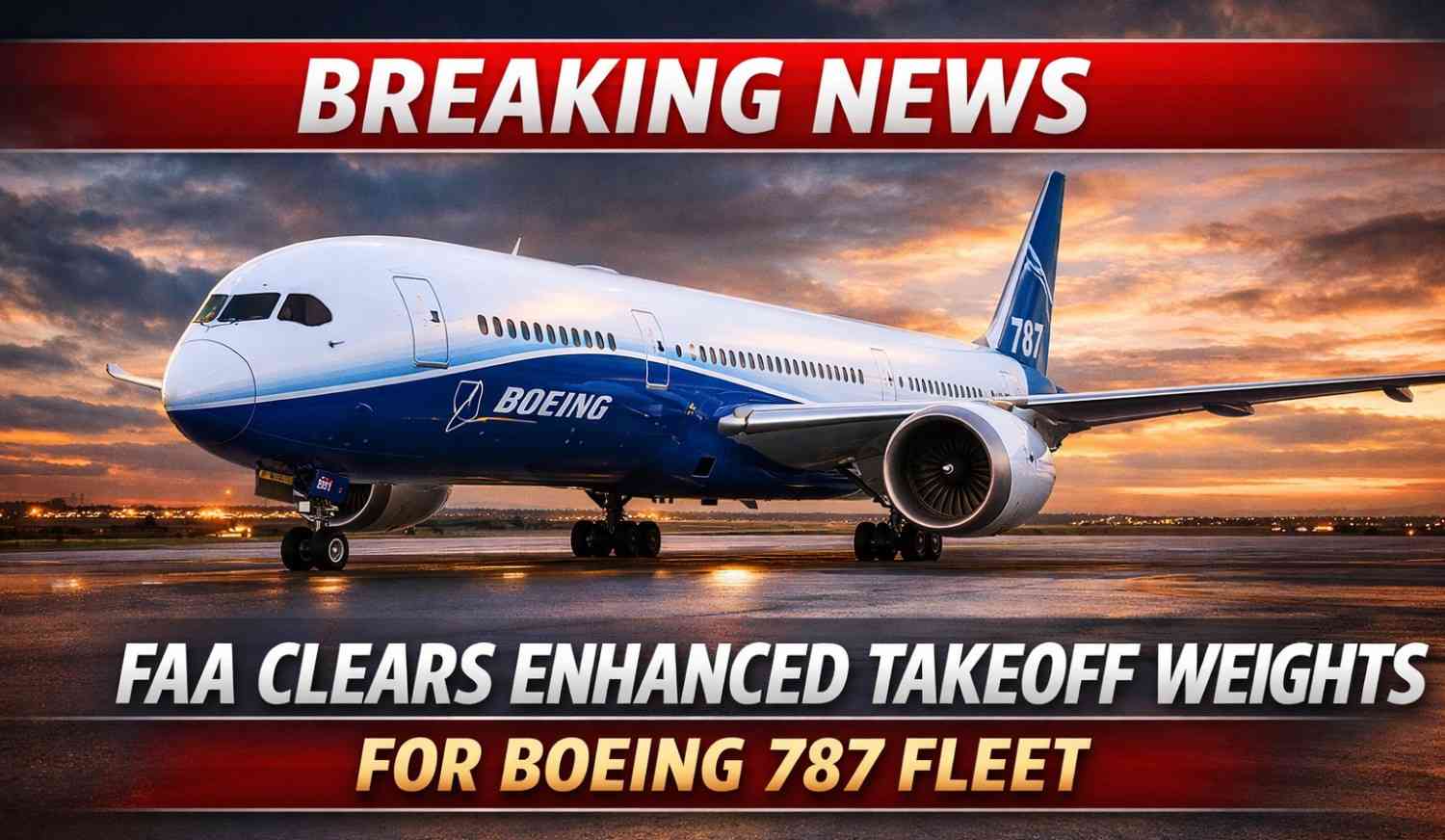
Upgrade Enhances Payload Capacity and Flight Range
The Federal Aviation Administration (FAA) has approved increased maximum takeoff weights for the Boeing 787-9 Dreamliner and Boeing 787-10 Dreamliner which will enable both aircraft to carry more payload and travel greater distances. The Boeing enhancement will provide airlines with improved operational capacity to plan their routes while optimizing operational efficiency for both long-haul and ultra-long-haul flights.
More Flexibility for Airlines
Boeing reports that airlines will gain improved operational capacity because the new maximum takeoff weight (MTOW) allows them to increase their cargo and passenger transport capacity or fly longer distances while maintaining their current fuel efficiency standards.
Airline feedback led to the development of the upgrade, which airlines requested because they wanted aircraft that could operate in various market conditions.
John Murphy, chief project engineer for the 787 program, explained that airlines wanted both improved range and higher payload capacity. Boeing solutions allow operators to select their usage of extra capacity according to their particular route requirements.
Key Performance Improvements
The upgraded Boeing 787-9 Dreamliner will see an increase of approximately 10,000 pounds in maximum takeoff weight. The additional weight allows for three metric tons of extra payload capacity or enables the aircraft to fly more than 300 nautical miles beyond its regular range limits.
The Boeing 787-10 Dreamliner will receive a weight increase of 14,000 pounds which enables operators to carry an additional five metric tons of payload or achieve more than 400 nautical miles of extra range. The newly developed improvements will enable airlines to operate previously unreachable routes which they could not serve before because of financial constraints.
Available for Existing and New Aircraft
Boeing confirmed that all 787-9 and 787-10 aircraft built since December 2025 are structurally capable of supporting the higher weight limits. Airlines can select when to activate the increased capability which they can either use at delivery or postpone until their operational needs require it. The system enables carriers to adjust their aircraft performance according to different route economics and market conditions.
Airlines Prepare to Deploy Upgraded Jets
The Air New Zealand airline will be one of the first airlines to gain advantages from the upcoming upgrade which will help them expand their ultra-long-haul flight operations. The airline announced that its enhanced payload capacity will enable the company to develop better connections with other cities while attracting more tourists and strengthening its trade relationships.
Maintaining Efficiency While Expanding Capabilities
The 787 Dreamliner family will continue to achieve its industry-leading fuel efficiency according to Boeing which maintained that their aircraft weight has increased. The additional capacity enables airlines to operate their services without incurring major cost increases. The upgraded aircraft will become highly desirable for the current aviation market because it provides an optimal balance between performance and efficiency.
A Strategic Move for Future Growth
The FAA’s approval represents a key milestone for Boeing and its airline customers. The demand for long-haul travel will continue to increase which will make aircraft with better operational flexibility and efficiency essential for developing airline networks. The Boeing 787-9 and 787-10 now possess improved payload and range capabilities which enable them to satisfy the changing requirements of worldwide aviation.