
 Travel News Update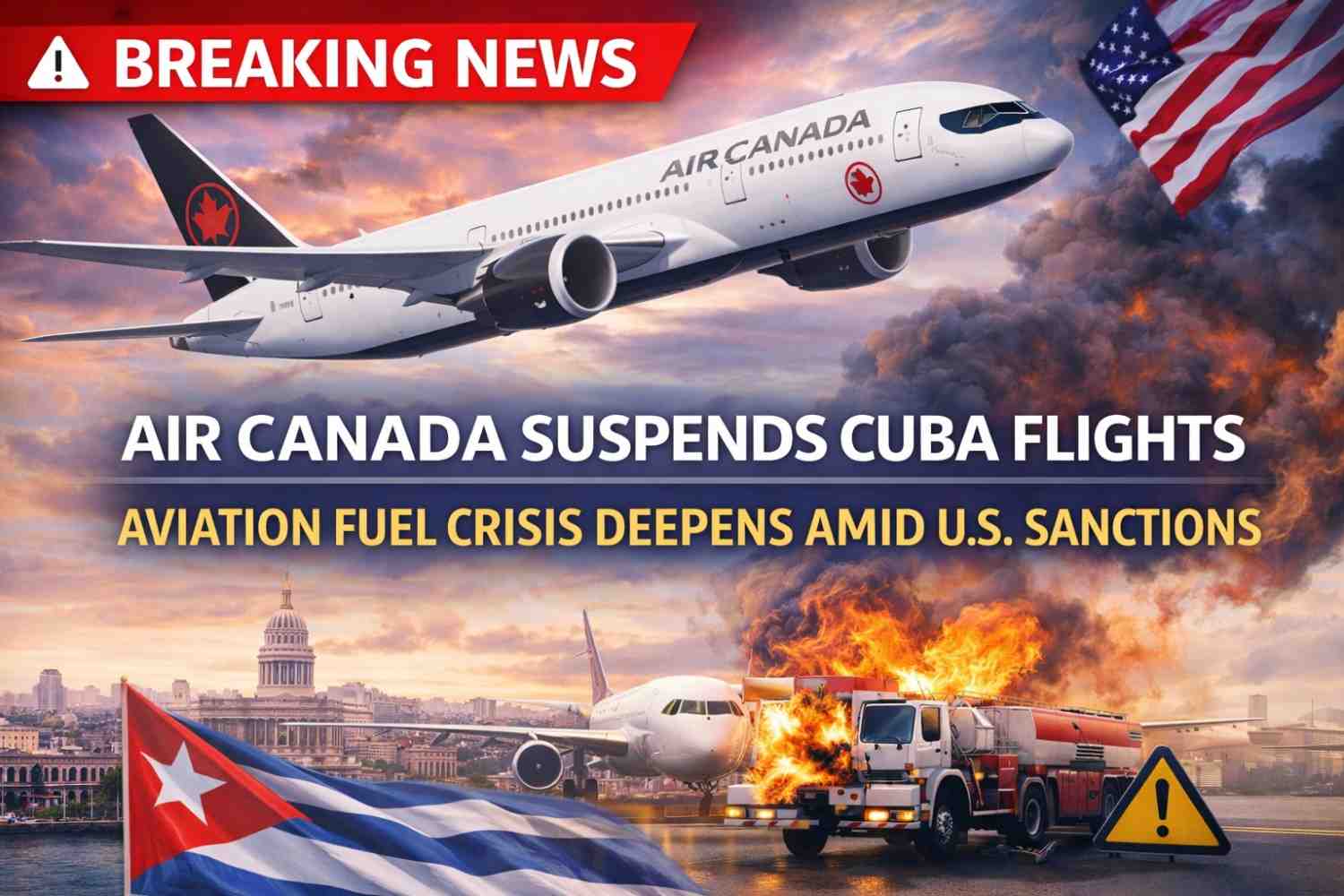
The grounding of Air Canada’s service to Cuba is an example of how United States aviation policy and geopolitical pressure still reverberate around the world even when it is not American carriers that are suspending flights. While the island nation is struggling to recover from fuel shortages, airlines across North America are scrambling to rethink routes, fuel logistics and passenger recovery strategies.
Fuel Shortage Forces Immediate Airline Action
Air Canada says it has suspended its service to Cuba, after Cuban authorities admitted they are unable to refuel commercial planes due to an extreme shortage of aviation fuel. Jet fuel sales at Cuban airports were expected to stop completely in a matter of days, leaving airlines without the operational assurance they need to safely maintain service.
In return, Air Canada wrote that it planned to run empty recovery flights southward, in order to repatriate some 3,000 people stranded in the Caribbean or South America. The airline also said it would tank tanker extra fuel and make technical refueling stops on return legs if possible.
But such actions, while they’ve worked in the near term, add heavy operational expenses and complexity-a problem U.S. carriers, who operate long haul services much more than Spirit-are well aware of.
U.S. Sanctions at the Center of the Crisis
And the fuel shortage did not happen in a vacuum. The situation can only have been exacerbated by increased political pressure from the US designed to restrict Cuban oil supplies, which included threats to impose tariffs or penalties on countries supplying petrol Venezuela for distribution in Cuba.
For a deeper analysis of how U.S. sanctions quietly reshape airline route maps and fuel logistics across the Caribbean, read How U.S. Sanctions Quietly Reshape Airline Route Maps Across the Caribbean
Now that Venezuela which for many years was Cuba’s main energy provider is no longer in a position to assist Havana, for geopolitical reasons and because of U.S. meddling, the Cuban access to available aviation fuel plummeted fast.
Fuel access is, from an aviation perspective, just as important to aircraft availability and when supply lines are interrupted, there is little that airlines airline can do except to suspend operations.
Why This Matters to the U.S. Aviation
But while the larger fallout is a reflection of how far-reaching secondary repercussions could be from a single airline’s decision to pull back because of the crisis, that is not even to say why U.S. aviation networks are suddenly feeling its effects:
- Many passengers on Canada–Cuba fly through U.S. airspace and airports
- U.S. airlines American Airlines, Delta, Southwest, JetBlue and United still fly to Cuba
- Key Caribbean gateways are served from the major U.S. airports in Miami, Fort Lauderdale, Tampa, Houston and Atlanta
While longer-term consequences are at risk, a protracted shortage of fuel in Cuba could lead U.S. airlines to make hard decisions about their operations, including canceling flights or repositioning aircraft while carrying extra fuel from departure airports in the United States—a costly and weight-sensitive procedure known as tankering.
Airlines Prepare for Contingencies
And airlines flying to Cuba are probably conducting internal risk assessments, with an emphasis on:
- Fuel availability guarantees
- Emergency diversion options
- Aircraft weight and fuel restrictions
- Passenger recovery logistics
Tankering fuel is also possible but reduces payload capacity and raises costs, particularly for narrow-body aircraft typically serving U.S.–Caribbean routes.
If conditions deteriorate, U.S. airlines could follow Air Canada’s lead and preemptively take such steps to avoid last-minute cancellations that can knock an entire day of flying off the books.
Impact on Passengers and Airports
Travelers, particularly leisure passengers flying to resort destinations, have felt the immediate effects most acutely. Suspended service affects:
- Tour operators and charter agreements
- Airport concession revenue
- Hotel occupancy and tourism-related businesses
From the viewpoints of U.S. airports, there could be some relief from congestion at hubs if traffic to Cuba declines slightly, as flyers may turn instead to other Caribbean destinations served by U.S. airlines.
Florida airports are especially vulnerable since Cuba routes account for a meaningful share of short-haul international traffic.
Broader Aviation and Economic Consequences
Cuba has taken such steps as rationing energy use, cutting back the work week and limiting the operations of resorts. These internal pressures muddy the waters of aviation recovery as well.
Uncertainty tends to be worse for airlines than bad news. With no firm schedule for fuel availability, carriers have been hesitant to assign aircraft and crews to routes that might be grounded suddenly. This is one example of how closely-linked aviation and political stability as well energy security can be, especially in areas where supply chains are fragile.
What Travelers Should Expect
Passengers with plans to travel to or through Cuba or even those connecting through U.S. airports offering flights to Caribbean destinations should brace themselves for:
- Schedule changes or seasonal cancellations
- Reduced seat availability
- Higher fares on remaining routes
- Longer connection times
Airlines are recommending that passengers check their flight’s status and read rebooking and refund policies.
Industry Outlook
Air Canada says it hopes to resume some routes on May 1, provided it can assess fuel availability and geopolitical factors. But industry analysts said any resumption is still highly contingent on U.S. policy direction and regional oil supply stability.
The other international airlines, including those based in the United States, are expected to remain watchful and perhaps make further announcements if things do not get better travelnewsupdate.