 Travel News Update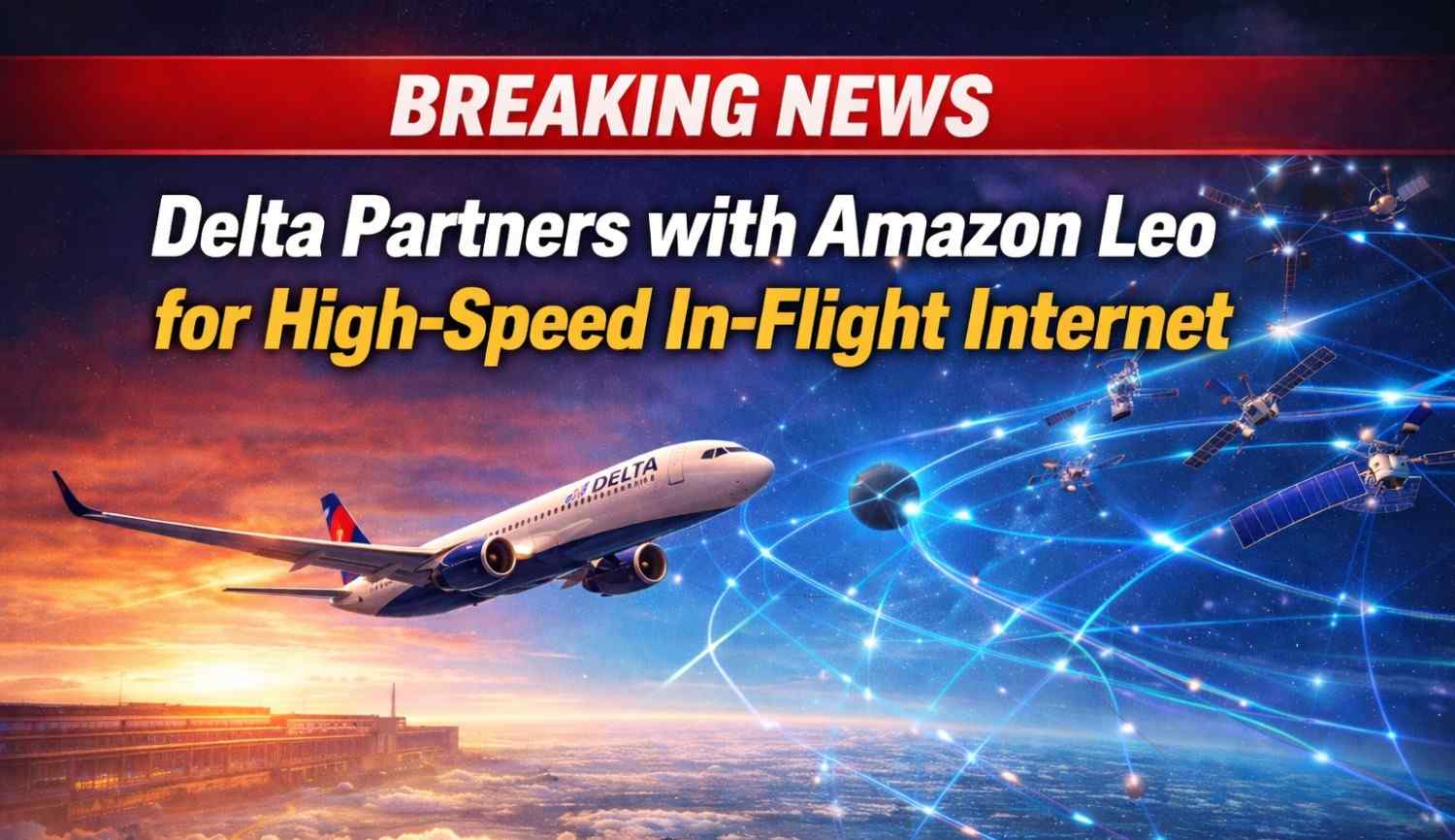
Delta Expands Connectivity with New Satellite Technology
Delta Air Lines has announced a major step forward in improving in-flight connectivity by partnering with Amazon’s Project Leo. This new agreement aims to bring faster and more reliable internet service to passengers across Delta’s fleet.
The airline plans to install this advanced technology on around 500 aircraft, with the rollout expected to begin in 2028. This move highlights Delta’s focus on improving passenger experience through better connectivity.
What is Amazon Leo and How It Works
Amazon Leo is a satellite internet system that uses low-Earth-orbit satellites to deliver high-speed, low-latency internet. Compared to traditional satellite systems, this technology provides faster speeds and more stable connections.
This means passengers will be able to enjoy internet speeds similar to what they experience at home or in the office. Activities like streaming videos, working online, gaming, and shopping during flights will become much smoother.
Faster Wi-Fi for a Better Travel Experience
Delta’s new partnership will significantly enhance its current onboard Wi-Fi service. The airline already offers Delta Sync Wi-Fi, which is powered by Viasat and supported by T-Mobile.
With Amazon Leo, Delta plans to expand this service to provide seamless “gate-to-gate” connectivity. This means passengers can stay connected from the moment they board until they land, without interruptions.
Large-Scale Installation Plans
Delta has confirmed that the new system will be installed on 500 aircraft in the initial phase. However, the airline has not yet revealed which aircraft types will receive the upgrade first.
This large-scale rollout shows Delta’s commitment to staying ahead in the competitive airline industry, where passengers increasingly expect reliable internet access during flights.
Leadership Vision and Future Plans
Delta CEO Ed Bastian emphasized that this partnership will bring the fastest and most cost-effective technology available today. He also highlighted the importance of working with a global leader like Amazon to create better connections for customers.
In addition to satellite internet, Delta plans to use other Amazon technologies, including artificial intelligence, to further improve customer experience. While details are limited, this could include smarter services, personalized content, and improved onboard systems.
Industry Trend Toward Better Connectivity
Delta is not alone in this move. Many airlines are now investing in advanced satellite-based internet systems to meet growing passenger expectations.
For example, JetBlue has also partnered with Amazon Leo, while other airlines are exploring similar technologies. Systems like these and competitors such as Starlink are changing how passengers experience internet access in the sky.
Conclusion
Delta’s partnership with Amazon Leo marks a major milestone in the future of in-flight connectivity. With faster speeds, lower latency, and expanded coverage, passengers can expect a much better online experience during flights.
As airlines continue to adopt advanced technologies, staying connected in the air will soon become as easy as it is on the ground.