 Travel News Update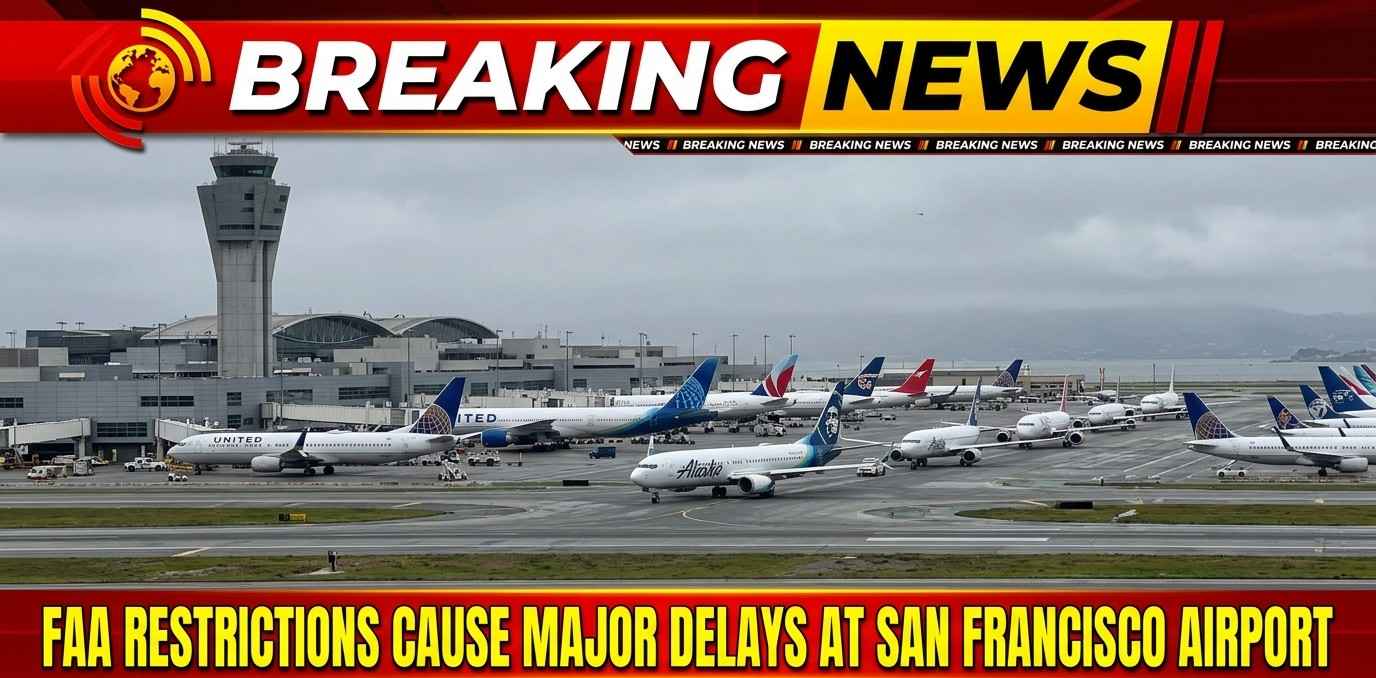
Flight Limits Introduced at San Francisco Airport
Flights at San Francisco International Airport are expected to face delays after new restrictions were introduced by the Federal Aviation Administration (FAA). The agency has reduced the number of flights that can land at the airport each hour, which is already affecting schedules.
Earlier, the airport could handle around 54 landings per hour. Now, that number has been reduced to 36. This drop in capacity is significant for a busy airport like San Francisco, where traffic levels are usually high throughout the day.
Reasons Behind the New Restrictions
The FAA made this decision mainly due to ongoing runway construction and updated safety rules. Construction work at the airport has limited the available runways, making it harder to manage a high number of flights at the same time.
At the same time, new safety guidelines do not allow parallel landings under certain conditions, especially during poor weather or low visibility. These rules are designed to improve safety, but they also reduce the number of flights that can land within a given time.
Delays Expected Across Flights
With fewer flights allowed to land, delays are expected to increase. Reports suggest that up to a quarter of flights could be delayed by more than 30 minutes. This can create problems not just at San Francisco, but also at other airports connected through flight networks.
Passengers may experience longer waiting times, delayed arrivals, and missed connections. Even flights that are not directly arriving at San Francisco can be affected due to aircraft and crew rotations.
Airlines Feeling the Impact
Major airlines operating at San Francisco are already adjusting to these changes. Carriers like United Airlines and Alaska Airlines have a strong presence at the airport, which means they are more likely to face disruptions.
Since these airlines operate many daily flights, even small scheduling changes can lead to wider delays across their networks.
What This Means for Travelers
Passengers planning to travel through San Francisco should be prepared for possible delays. Checking flight updates before heading to the airport can help avoid confusion. It is also a good idea to allow extra time for connections, as schedules may change at short notice.
Airlines are working to manage the situation, but delays may continue until operations return to normal.
Outlook for the Coming Months
The FAA has not provided a clear timeline for when the restrictions will end. However, the situation is expected to continue until construction work is completed and normal operations can resume.
This development shows how infrastructure work and safety improvements can temporarily affect travel plans. While the changes are necessary for long-term benefits, passengers may face short-term inconvenience.
Conclusion
The new FAA restrictions at San Francisco International Airport are likely to cause delays for many travelers. With fewer flights allowed to land each hour, airlines and passengers will need to adjust to changing schedules. Until the situation improves, planning ahead will be key to avoiding travel disruptions.