
 Travel News Update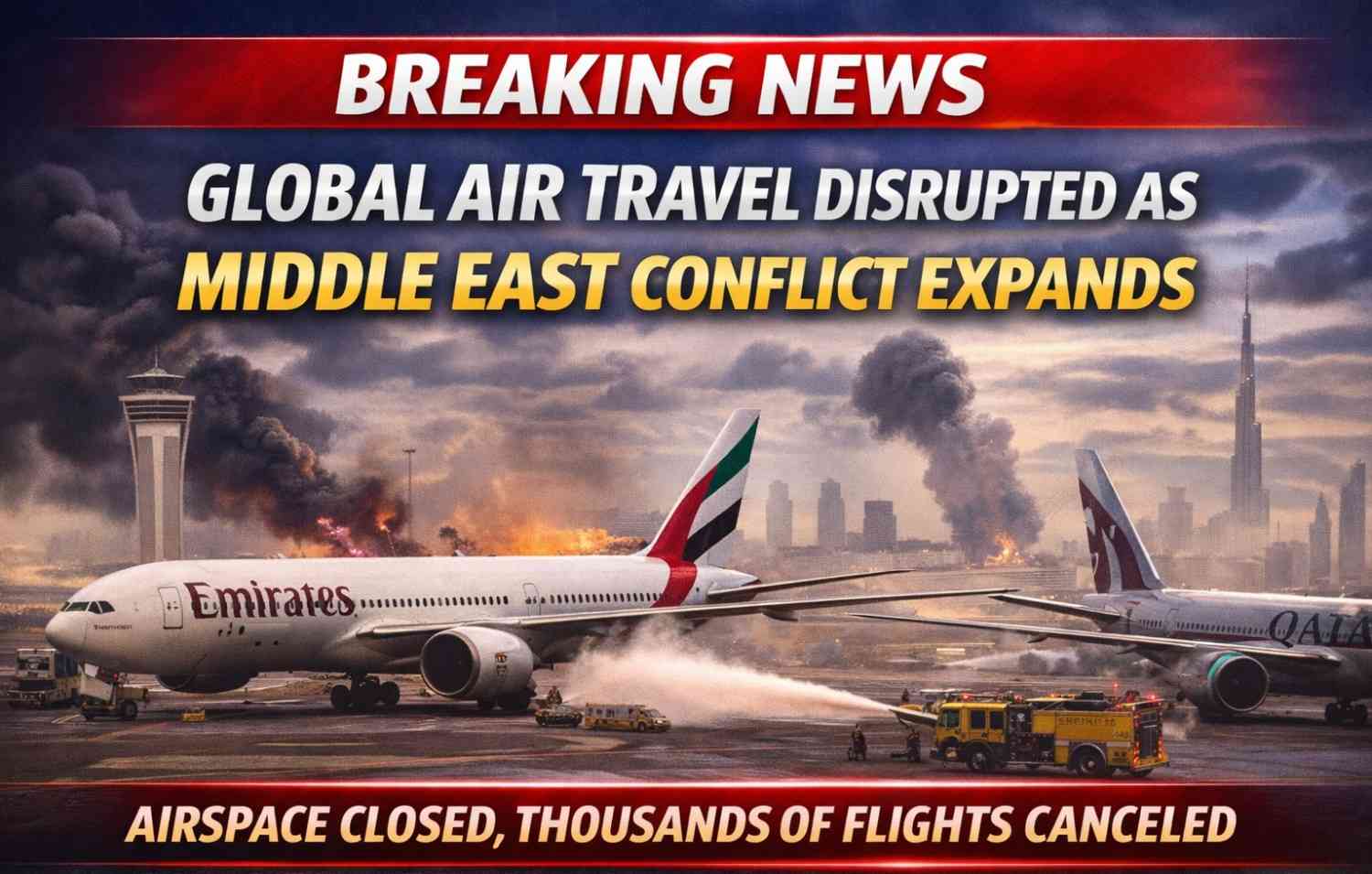
Major Airspace Closures Disrupt Global Travel
Air travel across the Middle East and beyond has been heavily disrupted as the conflict involving Iran continues to expand. Hundreds of thousands of travelers remain stranded after multiple countries closed their airspace, leading to widespread flight cancellations around the world.
One of the most affected areas is the United Arab Emirates (UAE). Airspace over much of the country has been closed since Saturday. The UAE is home to Dubai International Airport, which was the world’s busiest airport in 2024. It also houses Zayed International Airport, the main hub for long-haul travel in Abu Dhabi.
Both airports play a key role in connecting Europe, Asia, and the Middle East. With their closure, global flight networks have been severely affected.
Damage Reported in Dubai
Dubai International Airport reportedly sustained damage after Iran launched retaliatory attacks. Four airport staff members were injured. Officials have not confirmed whether the airport was directly hit by a missile or drone.
Videos shared online showed smoke inside a terminal building and visible damage to ceilings and ground-floor shops. Airport authorities later announced that a limited number of flights would resume at Dubai International and Dubai World Central later Monday evening. However, passengers were advised not to travel to the airport unless directly contacted by their airline.
Major carriers based in Dubai, including Emirates, have been significantly impacted.
Regional Airports Shut Down
Several other countries in the region have halted commercial flights. These include Israel, Iran, Qatar, Kuwait, Iraq, and Bahrain. Important hubs such as Ben Gurion Airport and Hamad International Airport are currently closed.
Israeli national carrier El Al has announced plans to operate rescue flights for stranded Israeli citizens once airspace reopens.
In Jordan, civilian airspace is closed during certain hours until March 5. About half of all flights at Queen Alia International Airport near Amman have been canceled. Saudi Arabia’s airspace remains open, but many flights are being rerouted away from the eastern part of the country as a precaution.
Thousands of Flights Canceled Worldwide
According to flight tracking data, nearly 2,500 flights were canceled globally by midday Monday. Airports across the Middle East saw the highest number of cancellations. However, the impact is spreading worldwide, affecting airports in cities such as London, Cairo, New Delhi, and Hyderabad.
International airlines including Delta Air Lines, Lufthansa, and British Airways have suspended service to parts of Israel and the broader Middle East. Meanwhile, Air India is rerouting some long-haul flights to Europe and North America to avoid Middle Eastern airspace.
Aviation experts warn that this could become one of the biggest travel disruptions since the COVID-19 pandemic if the conflict continues.
Conflict Expands to New Areas
The situation worsened late Sunday and early Monday as fighting spread to other regions. Hezbollah launched rockets toward Israel from southern Lebanon, and Israel responded with air strikes near Beirut. A drone strike was also reported at a British military base in Cyprus, leading airlines to cancel some flights to the island.
With tensions still rising and military operations expected to continue, global air travel remains uncertain. Airlines and passengers alike are closely watching developments as governments assess when it will be safe to reopen airspace.