
 Travel News Update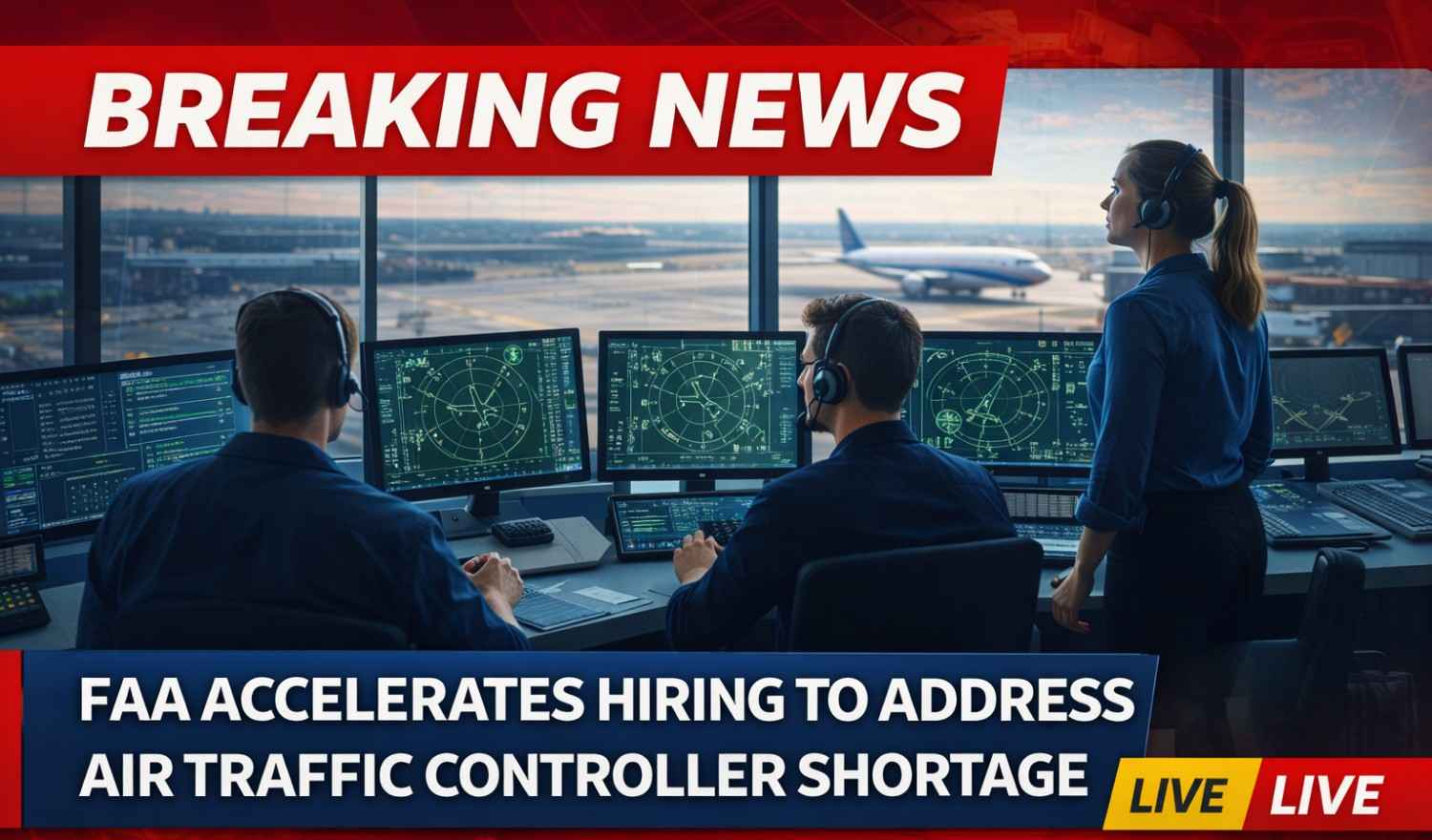
The Federal Aviation Administration (FAA) is increasing its efforts to hire more air traffic controllers as the aviation industry continues to grow across the United States. The move comes as airports and airlines face ongoing staffing shortages, which have contributed to flight delays and operational challenges in recent years. By expanding hiring and training programs, the FAA aims to improve safety, efficiency, and reliability in the national airspace system.
Why Air Traffic Controllers Are Important
Air traffic controllers play a critical role in aviation safety. They guide aircraft during takeoff, landing, and while flying in controlled airspace. Controllers ensure that planes maintain safe distances from each other and help pilots avoid weather hazards and congestion.
Without enough trained controllers, airports may need to reduce the number of flights they handle. This can lead to delays, cancellations, and disruptions for passengers. The FAA has acknowledged that increasing staffing levels is essential to support current flight demand and future growth.
Causes of the Controller Shortage
Several factors have contributed to the shortage of air traffic controllers. One major reason is retirements. Many experienced controllers hired decades ago are now reaching retirement age. Replacing them takes time because the training process is long and complex.
Another factor was the slowdown in hiring and training during the COVID-19 pandemic. Training programs were temporarily paused or reduced, which created a gap in staffing levels. As air travel demand has recovered quickly, the shortage has become more noticeable.
Additionally, the job itself is highly demanding. Controllers must undergo extensive training and pass strict medical and performance standards.
FAA Hiring and Training Plans
To solve the problem, the FAA has announced plans to hire thousands of new controllers over the next few years. The agency is increasing recruitment efforts and encouraging more people to apply for air traffic control careers.
New hires must complete training at the FAA Academy and receive additional on-the-job training at assigned facilities. The full certification process can take two to three years, depending on the complexity of the airport or airspace.
The FAA is also working with the U.S. Aviation Department of Transportation to secure funding and resources to support hiring and training programs.
Impact on Airlines and Passengers
Airlines have welcomed the FAA’s hiring efforts, as controller shortages have sometimes forced flight reductions at busy airports. Increasing staffing levels will help airports operate more smoothly and reduce delays.
Passengers are expected to benefit from improved reliability, especially during peak travel seasons such as summer and holidays. With more controllers available, airports can handle higher traffic volumes safely.
Long-Term Outlook for U.S. Aviation
The FAA expects air travel demand to continue growing in the coming years. Hiring and training more air traffic controllers is essential to support this growth and maintain high safety standards.
The agency’s efforts represent an important step toward strengthening the aviation system. As more controllers complete training and begin working at airports nationwide, flight operations are expected to become more efficient and reliable.
For travelers, airlines, and aviation professionals, the FAA’s hiring initiative is a positive development that will help ensure the continued safety and stability of air travel across the United States.