
 Travel News Update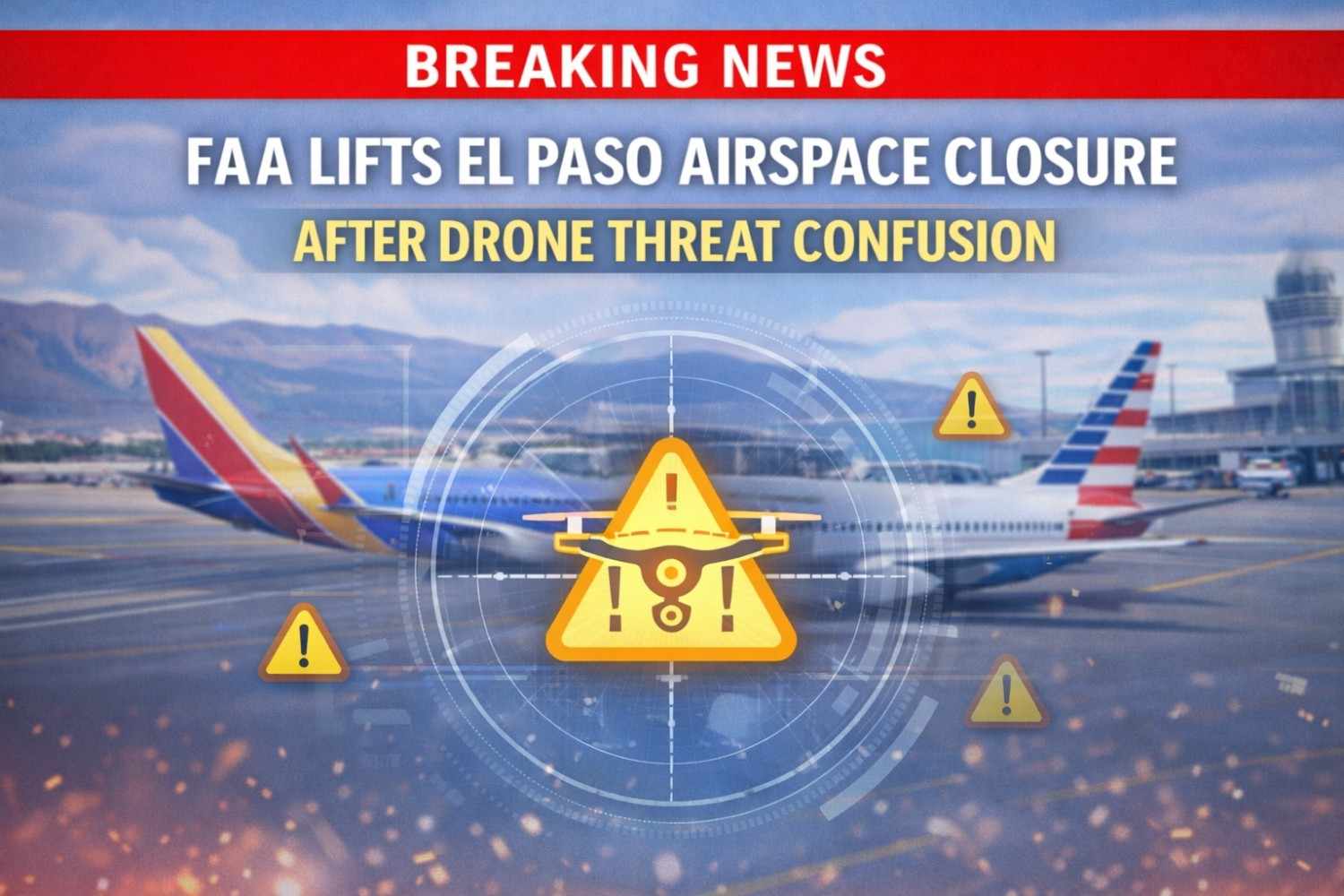
The temporary flight restriction in place over El Paso, Texas, was lifted by the FAA after initially being invoked because of a potential drone threat. The FAA had limited air traffic, citing “special security reasons,” but later corrected course and said that what all the fuss was about had been a mistaken identification of a drone, possibly connected to cartel activity. The limitation created chaos, but flights were back up in the air after the FAA decided there was no continuing threat to commercial aviation.
FAA’s Official Statement
The FAA said the closure was a precaution against what it called a threat from a drone “in close vicinity” to the airport, and authorities having taken “appropriate action.” El Paso is a border city, crawling with security fears and in their eyes drones are always connected to illicit behavior. There is no longer an immediate threat to aviation safety, normal operations have resumed and the FAA does not expect any associated impact on local flights.
Impact on Flights and Passengers
The planes could be seen banking out of El Paso. Several flights were delayed or diverted due to the imposed closure. Airlines, including Southwest and American Airlines, had to delay flights or divert planes. Travelers experienced long delays, especially those with connecting flights, as planes were diverted to airports nearby. Although it was a short one, it spotlighted how issues having to do with sensitive airspace can cascade into systemic disruption of the airline sector, especially at busy airports.
What Travelers Should Expect
Travelers flying to or from El Paso can count on delays even after the air space restriction is lifted. As flights begin to be reinstated, air traffic controllers will work to process the backlog of planes. Passengers should:
- Check flight status via your airline app for real-time updates
- Be prepared for potential delays or diversions as air traffic is cleared.
- Budget more time at the airport if something goes awry at the last minute
Background on the Incident
Located on the U.S.-Mexico border, it’d be safe to guess that El Paso has increasingly been subject to potential security concerns related to drones. Drones have also been used to smuggle and surveil, which has led the FAA to add security requirements. It is among an increasing number of drone-related security threats to U.S. aviation and elsewhere around the world. Adapt to future threats The FAA’s rapid response proved it can move fast when safety is on the line, but also showed that actually dealing with drone threats is far more complicated in real time.
Context of U.S. Aviation and Drone Threats
The use of drones near airports has raised alarms across the aviation industry. While drone-related incidents are rare, they pose a growing threat to aviation safety, especially in busy airspaces like El Paso. The FAA has been stepping up its efforts to implement new systems for monitoring and preventing unauthorized drone activity, especially in sensitive areas. The incident underscores the need for continuous surveillance and cooperation between federal agencies to manage these emerging threats.
Conclusion
That El Paso airspace closure, rescinded after an errant drone report is a case in point illustrating the fast moving and emerging nature of aviation security. Though the hack may have led to some contentious waiting time for other planes and their passengers, this incident serves as a reminder that it is necessary to adapt in response to new threats literally on the fly. Travelers simply have to be vigilant and informed, especially while traveling through places with areas of high security like El Paso. As the technology for drones continues to develop, it’s obvious that both regulators and airlines will have to keep on top of this risk.