
 Travel News Update
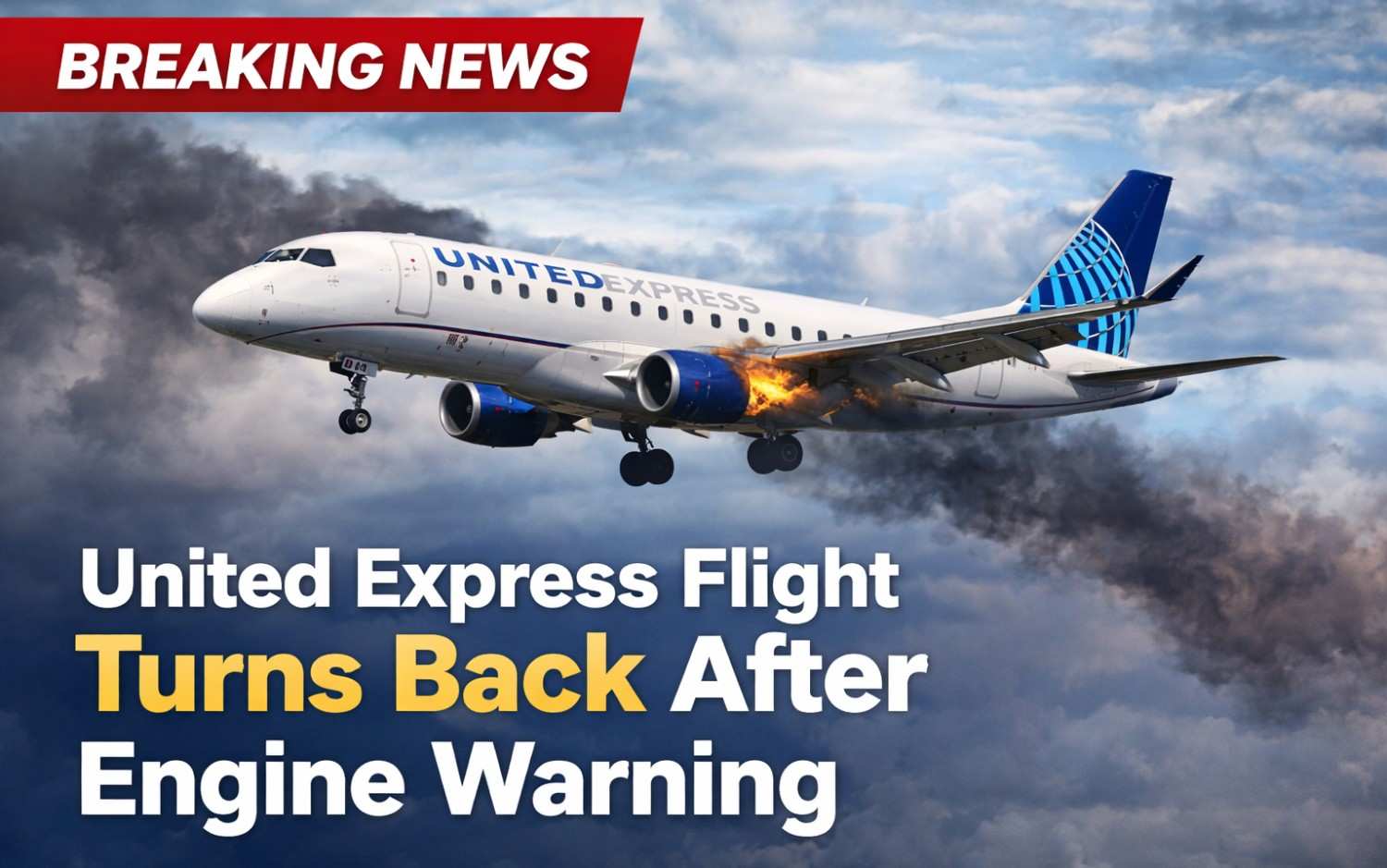
A United Airlines flight was forced to turn around Sunday evening after taking off from Denver International Airport (DEN) en route to Boise, Idaho (BOI), when the plane declared an emergency. The occurrence, involving United Airlines Flight UA1125 was followed by the attendance of air traffic control and airport fire services.
Based on what are known as flight-tracking and air traffic communications data, the plane made a sudden diversion while cruising at a high altitude, prematurely indicating an emergency condition that must be promptly resolved.
Emergency Declared Mid-Flight Over Wyoming
United flight UA1125 took off as planned from Denver and climbed to its recommended cruising height. Some 35 minutes into the flight, while cruising over Wyoming at an altitude of 38,000 feet, the pilots declared an emergency to air traffic control.
The cause of the emergency has not been revealed, but according to aviation doctrine, declaring an emergency allows a flight to receive priority treatment in terms of routing (direct routing), descent clearance (rapid descent), and landing runway availability.
Live tracking data indicates the plane made a very sharp left hand turn to the south, strongly deviating from its planned course and beginning a controlled but steep decline back down towards Denver International.
Aircraft and Flight Details
A Boeing 737-800 series aircraft (737-824), with the registration N11206, a narrow-body jetliner that is often used by United Airlines for its domestic-service in America, operated the flight. The plane was supposed to depart on a routine evening flight from Denver to Boise, a two-hour-long cruise.
Denver International Airport is one of United’s biggest hubs, with robust maintenance facilities, emergency response personnel and operational redundancy – factors that would make it a natural place to bring the plane back in the event of an in-flight issue.
Priority Handling and Emergency Services Activated
With the emergency declared, ATC gave us vectors back to Denver and no traffic for return. Alert emergency crews are called at DIA when an aircraft calls for an emergency, no matter the severity.
Aviation experts say emergencies can be declared for a variety of reasons such as technical alerts, abnormal system behaviour, medical problems concerning passengers or crew or in response to cock-pit warnings of an oncoming danger. Declaring emergency does not always imply that immediate peril is at hand, but it frees up a flight crew to take the maximum precautions in managing their situation.
Safe Landing Confirmed
The Denver-bound United UA1125 safely landed at 1:28MST on Runway 34R of the Denver International Airport, where it had taken off about 1 hour and 22 minutes earlier. Airport officials say emergency crews were waiting on the scene at ground level, but they weren’t needed for any active intervention upon landing.
The aircraft cleared the runway following touchdown in the normal manner, suggesting that there were no issues at that time that would have precluded taxiing normally. Neither passengers nor crew sustained any injuries and there had been no sign of damage to the aircraft’s structure.
Airline Response Pending
As of press time, there has been no official word from United on the nature of the emergency. The number of passengers on board and whether the event was a mechanical issue or medical situation had not been confirmed by the airline either.
Often, airlines look into issues through internal inspections and reviews before releasing public statements, especially when no injuries or aircraft damage is caused. The aircraft in question should have a thorough technical check-over before it returns to service.
Impact on Passengers and Operations
It is likely that passengers on Flight UA1125 were either reaccommodated on a later flights or onto different services to Boise, although exact details are yet to be verified. The precautionary returns often result in delays, cancellations and if the aircraft is grounded for inspection. Operations at Denver International Airport, meanwhile, were only minimally impacted as a result of the emergency landing with no runway closures or protracted delays for other flights.
Aviation Safety Context
Emergency declarations are a common aspect of safety risk management in aviation and demonstrate a proactive approach to the management of risk. It’s part of a commercial pilot’s training to be conservative, especially at high altitude and far from an appropriate alternate airport.
Aviation safety analysts said the pilot’s ability to pinpoint a problem, communicate clearly with air traffic control and bring a plane in safely is further proof of how strong the safety net for commercial aviation really is.
The Boeing 737-800 is a workhorse tasking with mature operations profile and considered as the most common aircraft type in world’s airline fleets.
Ongoing Monitoring and Updates
Emergency teams and flight tracking services are following developments. Additional details will be available after United Airlines has conducted an internal review and provides formal response concerning the emergency.