
 Travel News Update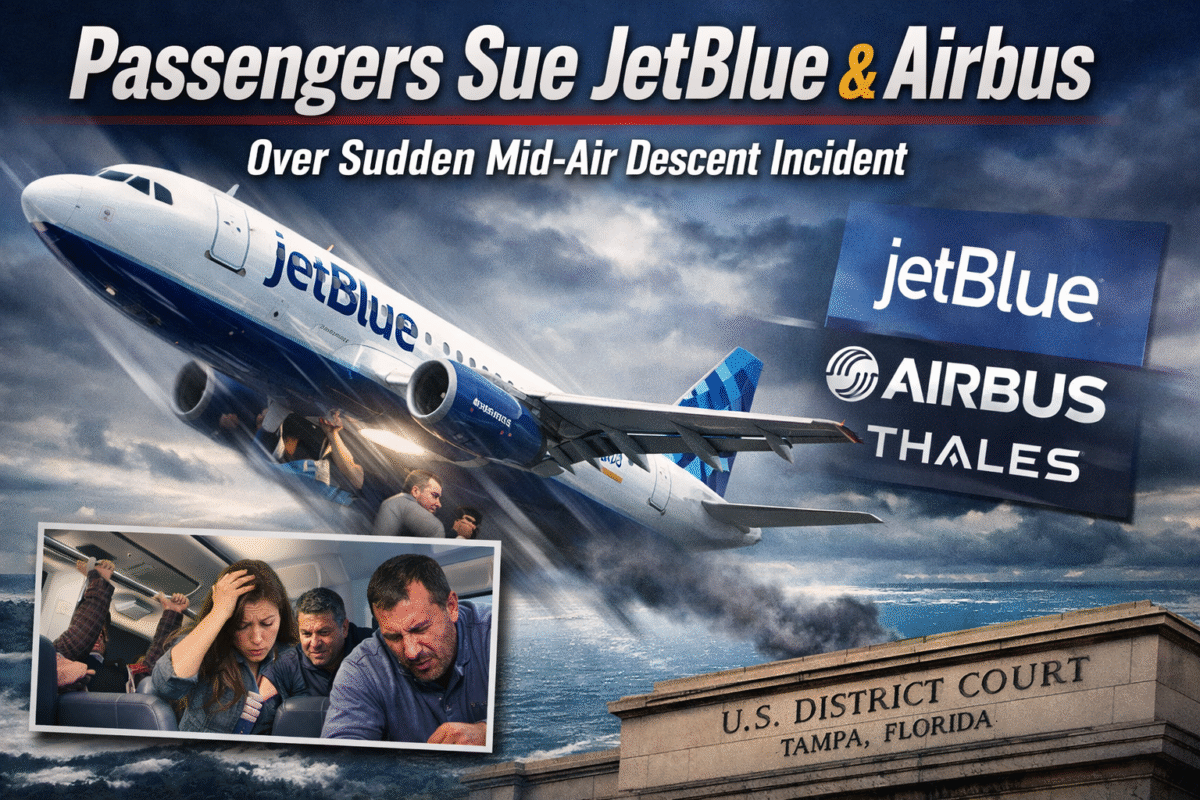
Three of the passengers aboard a JetBlue aircraft (an Airbus A320) that suddenly and unexpectedly nosedived in midair last year are suing JetBlue Airways, as well as Airbus (the manufacturer of the airplane), and Thales Avionics, alleging negligence AND unsafe flight control design resulting in physical injury and “mental anguish.”
The lawsuit, filed in federal court here, accuses JetBlue of having previously been aware of a repeated problem that some A320-family aircraft had with an autopilot-related system known as Elevator & Aileron Computers (ELAC), which the carrier failed to adequately fix.
What Happened on the Flight
The event took place on October 30, 2025, on JetBlue Flight 1230 flying from Cancún, Mexico, to Newark, NJ. Within seconds, according to court filings, the Airbus A320 abruptly nosed down while flying over the Gulf of Mexico, on autopilot. The plane dove 100 feet or so in a rapid descent before pilots declared an emergency and diverted to Tampa International Airport.
The rapid fall jolted passengers and crew members and left some of them with minor injuries, including strikes to their heads on overhead bins and cabin fixtures. The NTSB would later investigate the issue and determined it was related to the ELAC (elevators)-flight control system that controls critical pitch and roll commands.
Grounds for the Lawsuit
Nadia Ramos, Ricardo Racines and Natividad Martinez contend that Airbus and Thales negligently designed and tested the flight control software which resulted in an unairworthy condition. They argue that the system is defectively designed and unreasonably dangerous to passengers.
The complaint also references a global reaction to the incident. Soon after, Airbus issued guidance to airlines that they should revert to an older version of the ELAC software when pilots land aircraft at airports in locations on earth where there is a particularly high level of solar activity believed to cause corruption of flight control data a workaround intended as a preventative measure against such failures.
While Airbus alerted airlines to this possibility in its list of aircraft warnings about the effects of solar radiation on data integrity, the plaintiffs contend that neither of two official authoritative summary reports wrote down that explanation, indicating a lack of rigor concerning public safety reporting.
Legal and Industry Implications
In the lawsuit, which was filed in the Tampa district court as Ramos v. JetBlue Airways Corporation and alleges monetary relief for more than $75,000 per each plaintiff as well as damages for physical injuries and emotional distress.
“The Plaintiffs’ ability to hold JetBlue liable financially for the injuries that occurred during the international portion of the Cancun–Newark flight is governed by The Montreal Convention,” which regulates air carrier liability for international flights, Gregory added. It accuses Airbus and Thales of product liability, claiming it was negligent in its design and certification of an essential flight-control software.
Global Fleet Impact
The flight control problem which had led to the lawsuit affected thousands of other Airbus A320‑family aircraft throughout the world, as well. The software revert or patch command was of universal scope, meaning airlines flying the model had to download new software in some airplanes and rollback software that worked fine in others before resuming operations as normal.
Cases like accidents due to autopilot and flight control problems can severely undermine the public’s faith in autocam functionality, industry experts say, even when technical fixes are comprehensive. As the litigation proceeds, JetBlue and Airbus figure to come under as much legal scrutiny as they do in the regulatory reviews of flight control certification standards.
What Airlines and Regulators Are Watching
Airlines and travelnewsupdate the regulatory agencies that govern them closely watch lawsuits resulting from mid‑air incidents, as the results can have an impact on future safety standards, certification protocols and software development practices. This incident also demonstrates the continuing challenge to keep pace with rapid developments in avionics technology and the requirement for thorough system testing across a wide range of operational scenarios.
Airbus and JetBlue have not yet publicly commented on the suit at the time of this writing. Airbus, in previous comments following the October 2025 incident, said it pinned the flight control malfunction to information degradation from external sources, and JetBlue repeated its focus on safety and adherence to manufacturer and regulatory guidance.