

 Travel News Update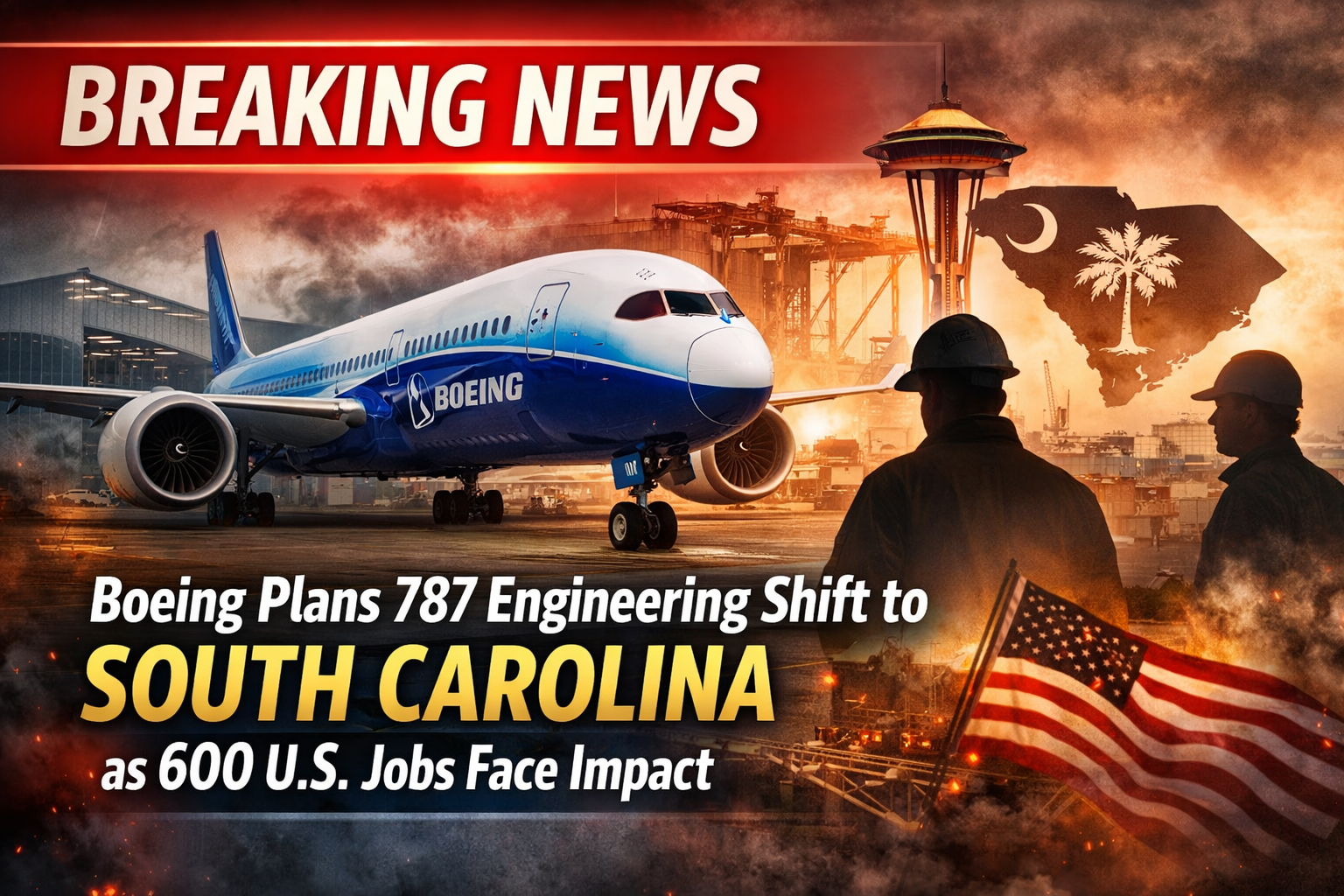
The departure of the Boeing 787 jobs for South Carolina is a sweeping reshuffling of the company’s domestic workforce, that could uproot hundreds of workers from Washington state. The transfer is part of Boeing’s larger strategy to reshuffle operations as it juggles the recovery in aircraft production, cost reduction and labor relations.
The latest job moves come as Boeing is working to more firmly right the ship of its Dreamliner program after years of manufacturing snarls and regulatory scrutiny.
Boeing 787 Jobs Shift May Affect Washington Engineers
Under the Boeing 787 jobs shift, the company is planning to move about 300 engineering jobs from Washington to South Carolina. The work would be relocated nearer to Boeing’s North Charleston operations, where final assembly of the 787 Dreamliner is already done.
Washington has long been a central hub for Boeing engineering and manufacturing. But engineers in the state are heavily unionized, unlike Boeing’s work force here in South Carolina. Labor groups have also expressed concerns that the jobs shift on the 787 could charmingly dilute Boeing’s experienced engineering workforce.
The timing is also sensitive, given that labor contracts for thousands of Boeing engineers in Washington expire in 2026.
Boeing has said it is moving to ensure its engineers are closer to the production lines and claims that will lead to better coordination and support more even output from the widebody plane known as the Dreamliner.
Boeing Defense Layoffs Add to Job Impact
In addition to the Boeing 787 jobs shift, the company’s defense division is getting ready to reduce its workforce by an estimated 300 supply-chain and support positions at a number of locations in the United States. Boeing described the cuts as typical moves to adjust the workforce and match staffing with business requirements.
Some affected staffers may apply for new positions in the company, though many roles are projected to be eliminated. The reductions are part of wider worries about job security in the U.S. aerospace industry, even as demand for commercial aircraft remains robust.
Strategic and Labor Implications
The Boeing 787 jobs shift underscores the company’s yearslong effort to build up operations in South Carolina, home to an expanding share of Boeing’s commercial aircraft business over the last decade.
North Charleston is already home to 787 final assembly and delivery facilities, as well as an expanding engineering presence there. Merging engineering and manufacturing functions could be a way for Boeing to save money, simplify decision-making and provide muscle behind higher production rates.
The possible loss of high-skilled engineering jobs would be one more setback to Washington, where years of reduced production rates, program changes and layoffs have hurt the state’s aerospace industry. Labor unions say the move could weaken Boeing’s formidable legacy of engineering expertise.
Broader Impact on U.S. Aviation Jobs
While Boeing continues to recruit for other programs, including the 737, between the jobs move on the Boeing 787 and defense layoffs, some 600 U.S. workers at issue could be impacted.
Operators of the 787 Dreamliner are not likely to face any immediate operational impact. But changes of that magnitude in the workforce are scrutinized, as engineering stability is critical to airplane quality, safety and long term program security.
What’s Next for Boeing
Boeing leadership has reiterated that the company remains committed to a U.S. workforce throughout its decision-making process on the best posture for both teams for continued growth. Nonetheless, the shift in jobs from Boeing 787 work on farm fields to inside buildings is bound to further fuel debate about labor relations and regional investment in a more competitive era of aerospace jobs.
Even as Boeing focuses on boosting airplane deliveries and shoring up its defense business, the question of how it’ll manage its workforce is certain to be a hot topic for American aviation travelnewsupdate .